Friday, May 26, 2023

Assumptions on fluency and professionalism

Originally written March 2019

"You have been here long enough to be perceived as civil"

Very often, people say things like: " Your English is very good, for how long have you lived in the US?" and then they are very surprised when they realize it was a very short time for developing this level of proficiency they've observed.


There is a wrong assumption that immigrants and refugees develop strong language proficiency through merely "living" in the United States when in most cases this is not true.

 
In fact, a significant proportion of immigrants come to the US already fluent or with an upper-intermediate level of proficiency because of the quality of language education they received in their home country, as a result of sincere self-learning efforts, or because of prior exposure to the English language and culture in their home countries (Most of African and Asian countries were former British colonies).
 

Meanwhile, some immigrants live in the US for decades and decades and never learn English or never reach a higher level of proficiency for so many factors mainly because second and foreign language acquisition is not a magical process, and English isn't a mineral in the American drinking water or air.

Most importantly, the United States -at least right now and in my experience in the last decade-is also built to facilitate the creation of linguistically and ethnically isolated communities, where you can live and work on the margins with your own folks without having to interact in English or with English speakers, it is not a place where people will welcome you with open arms and say hi to you if you look or sound different.

Besides being totally inaccurate and entitled, the assumption that any forms or signs of so-called "professionalism" you may show particularly with spoken language, is due to your prolonged exposure to "the American culture" suggests that other countries, their education, and professional settings, are almost always inferior and less developed than the US. 

So yeah, next time you want to compliment someone's ability to speak English, an international language and a dominant global culture, don't say stuff like that.

Wednesday, May 03, 2023

The divine gift of writing

Written originally on January 29th, 2023


بسم الله الرحمن الرحيم

ٱقۡرَأۡ بِٱسۡمِ رَبِّكَ ٱلَّذِي خَلَقَ (1) خَلَقَ ٱلۡإِنسَٰنَ مِنۡ عَلَقٍ (2) ٱقۡرَأۡ وَرَبُّكَ ٱلۡأَكۡرَمُ (3) ٱلَّذِي عَلَّمَ بِٱلۡقَلَمِ (4) عَلَّمَ ٱلۡإِنسَٰنَ مَا لَمۡ يَعۡلَمۡ (5)

1. Read! In the Name of your Lord who has created all that exists.
2. He has created humans from a clot.
3. Read! And your Lord is the Most Generous.
4. Who has taught ( the writing ) by the pen.
5. He has taught mankind that which they didn't know.

The first Quranic revelation to Prophet Muhammed صلى الله عليه وسلم

As I was going through my blog drafts on this blog from when I first began my English writing/blogging journey back in 2008 (90 unpublished drafts!), something I find myself doing every year or so, I found myself thinking of those commonly known, memorized, and recited verses of the Quran from Surat Al Alaq, I found myself feeling a sense of content and gratitude for the precious gift of writing and the ability to express oneself in spoken or written words to convey feelings and thoughts to others. 

As I read my posts on experiences I have passed, and experiences I still deal with, I also feel grateful that I have access to a good deal of my own words, thinking processes, and my feelings from a long time ago that feels like another lifetime, from times when I perhaps had more clarity at times, and more intensity at others, from stages in my life when I might have had more space to reflect, analyze, and contemplate, and better tools to navigate the world.

The irony in all of this is how I continue to experience navigating this world in similar ways, because I'm still the same person on the outside for all the environments I'm put in. It's crazy to think now that as time passes in years and decades, while a lot changes, a lot also remains the same. Not in so many good ways. 

It makes me a bit frustrated to imagine going through similar patterns and experiences since the first time I stepped out of Egypt in 2009, and until this day and time in 2023. Is this what they refer to with some fancy terms in English as re-exposure, or pro-longed exposure or something of that sort? Is that what they do research studies over years to write papers about?

On a good note and back to the beginning of my post, it does help me to see how I viewed novel experiences when I first went through them as a teenager who had just began wearing a scarf and spoke intermediate English with a British accent, and how I felt, versus how I might feel and respond now as a woman in her early to mid thirties who became an American citizen but still gets treated the same exact way no matter how far she has walked in the world and in her own internal journey.

We are fortunate when we can feel our feelings, and when we can understand why we feel them, we are fortunate when we can record those feelings and reactions and go back to them another time for guidance. Because we are living in a world where most people are conditioned to not feel their feelings, or don't have the space- or choose to not- to process feelings. 

Sunday, April 02, 2023

The Lantern (Fanoos) Lady

From Middle East Eye Discover's post on Instagram:

https://www.instagram.com/p/CpfKZxfDY_8/ 

During the Muslim holy month of fasting, Ramadan, and in the weeks leading up to it, it is hard to find a street in Cairo without the familiar glow of the fanous - or Ramadan lantern - displayed for sale.

The Ramadan lantern is a folkloric symbol that goes all the way back to the days of the Fatimid Caliph El Moaz (932- 975), whose chief general Jawhar al-Siqilli ordered the people of Egypt to go out in the streets lighting candles to welcome the Caliph home from Africa.

The night was windy so the Egyptians used simple fanous - lanterns - to protect the candles from the wind. Having seen the luminous and beautifying effect, the Caliph became enamoured with the idea and ordered that every mosque in Egypt should have a lit lantern in front of it.

Over the centuries following this incident, the lantern became inextricably linked to the holy month of Ramadan in Egypt. Even today, every house in Egypt makes sure to buy at least one lantern at the beginning of the month.

--------

Bringing Ramadan Spirit to American classrooms and libraries Ramadan 1444 Hijri/2023 AD:


Bringing Ramadan and Eid's spirits and how I relate to them as an Egyptian who was uprooted from my homeland and culture into an American classroom is a wonderful healing experience. 

It's a blessing that God opens such rare opportunities I have been yearning for, who knew that would be even possible?

This year feels really special in this regard, I was able for the first time to talk about how special Ramadan is in Egypt and how a lot of the cultural manifestations of the celebrations started in the heart of old Cairo, my beloved home town. Lanterns, tent makers quilts, the Mesaharati (the drummers who walk aroudn before dawn to wake people up) and so many more things that became an association with Ramadan worldwide. 

This is my 9th Ramadan away from Egypt, and as I approach the 10th I still struggle to think about those years passing, I obsess over decorations now more than ever because I feel like I need every single visual reminder possible to stay connected to my history. It's hard to speak of the intense emotions associated with my Ramadans in Egypt and to put it out in words, but despite the difficulty I deal with each year, I'm happy that I spoke of the beauty and shared it with so many more people this year.


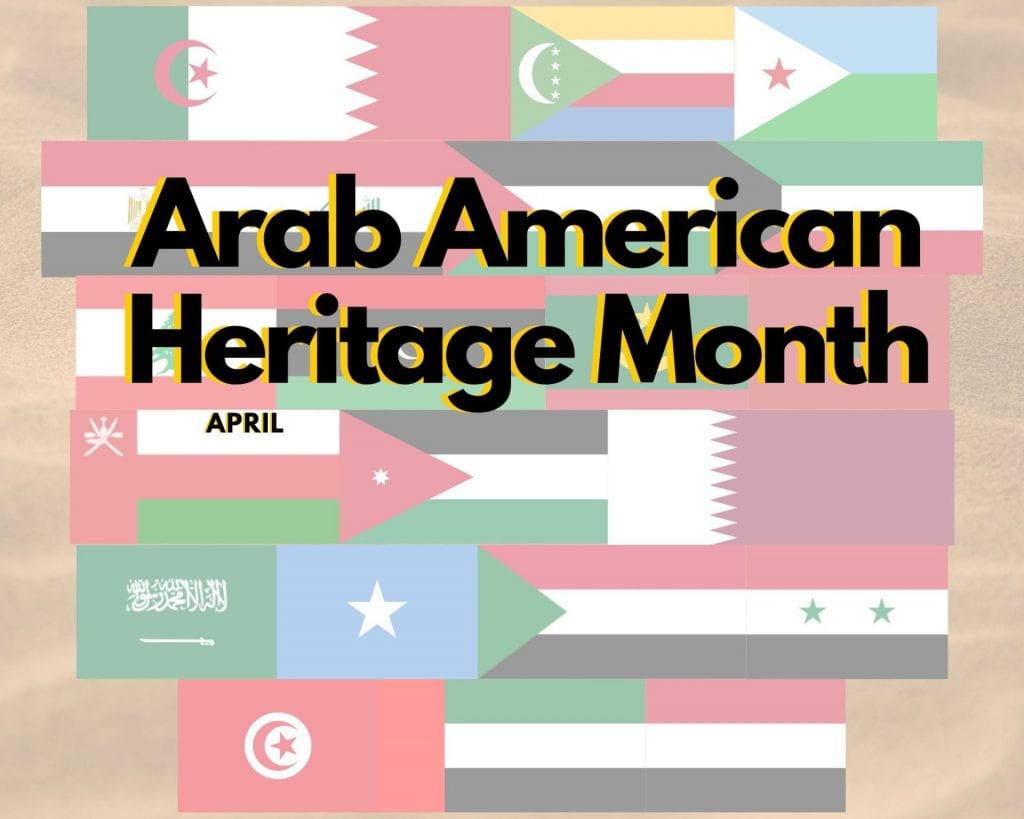
Supporting awareness around Arab Heritage Month in schools

Some of this year's new efforts and small success, connecting closely with the School District of Philadelphia to bring more context on the underrepresented experiences and stories of my people.

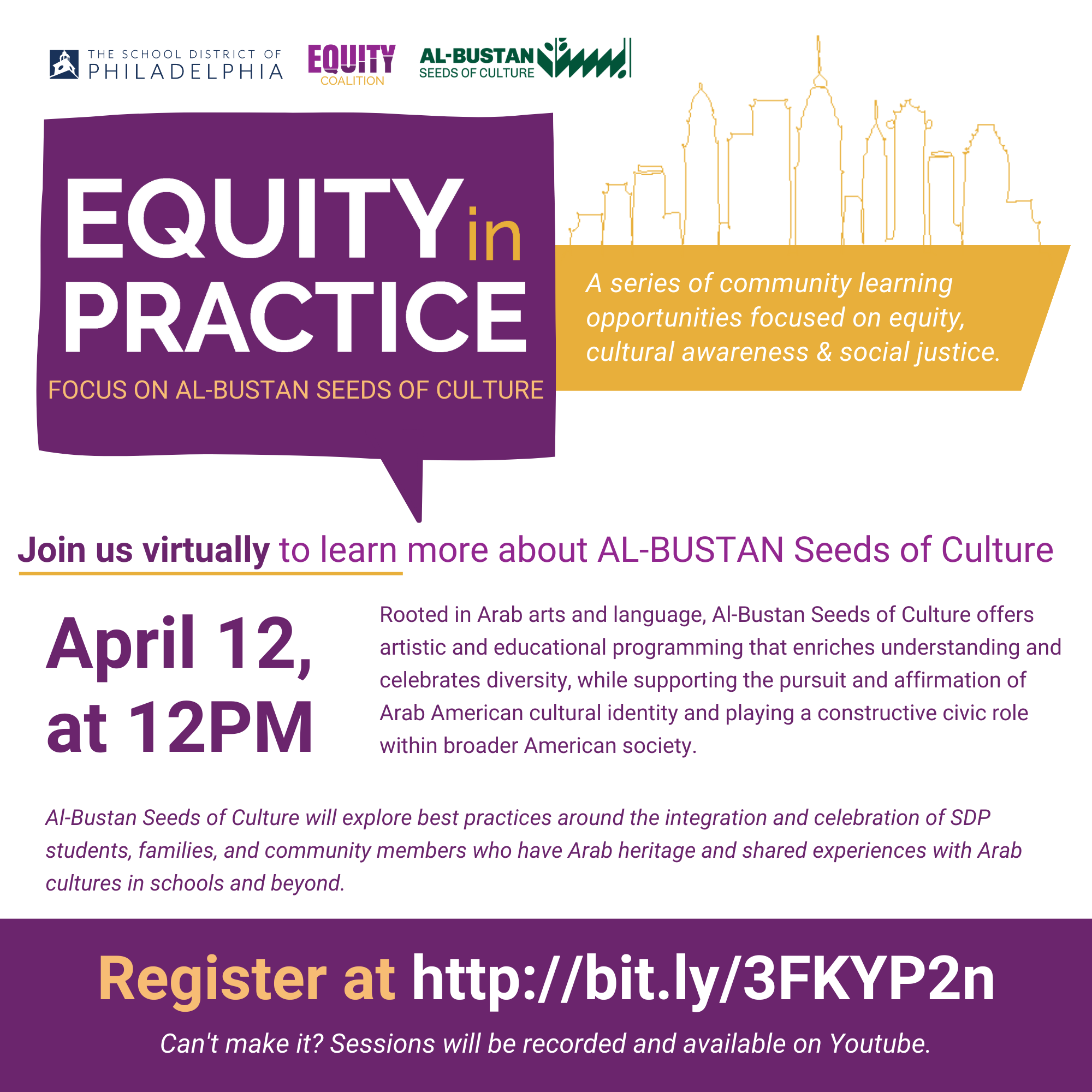
I feel grateful for having this opportunity to write something about Arab Heritage Month and Arab communities in Philadelphia for the April newsletter issued by The School District of Philadelphia's Equity Coalition. I will also be hosting a learning session mid-April to talk about best practices around the integration and celebration of students, families, and community members who have Arab heritage and shared experiences with Arab cultures in schools and beyond.

"Equity in Practice is a monthly lunch and learn series in which district stakeholders can learn about what services our partners throughout the city offer and learn ways to engage with the communities they serve."

Register here

Wednesday, April 12th, 2023, 12pm – 1pm, Virtual on Zoom, FREE

Read it all and pass it on, let's continue to shed light on our communities and their contributions. 

 https://www.philasd.org/dei/2023/03/27/april-2023-newsletter-2/


 “The Philadelphia area has been home to immigrants with Arab heritage from as early as the 1800s, the Arab community in Philadelphia has continued to grow rapidly and become more diverse in the past two decades. The Arabic language is now among the 5 most spoken languages in our school district by English language learners and their families.

Arab families in Philadelphia are concentrated in South, North, Southwest, and Northeast Philadelphia and while some have been here for 5 generations, many are also newcomers.

The Arabic language holds a special place for Philadelphia residents of many diverse cultural backgrounds who don’t necessarily hail from the Arab world with West Africans, Southeast and Central Asians, and African American Muslim communities in Philadelphia as examples.

Despite a long history of existence dating back prior to the US independence, Arab American communities from the Middle East and North Africa are still not included in the U.S Census, but there are national and local campaigns for their existence to be recognized.

We hope that this Arab Heritage Month is an opportunity for us to explore and reflect on the history, contributions, as well as current challenges that Arab heritage communities, students, and families in our school district strive to overcome.”

Friday, March 17, 2023

Our Names أسامينا

I ride the Uber today with a driver, his Uber name is Charles. My Uber name is Sarah. 

I overhear him say "Shabaan, Ramadan, InshaAllah" to someone on the phone, he speaks in a West African language, I'm curious and happy.

I smile and ask him about his phone conversation, I figured I can do because we are both African, Muslim, and immigrant, we can do that, he tells me that he is explaining the lunar Muslim calendar for his friend in Africa.

We start talking about Ramadan, immigration, and living as a Muslim in Philadelphia, how much we agree that we love being Muslim in Philly despite all the issues, how our Black Muslim brothers and sisters put the foundation for us to come here and be safe, somehow, in comparison to other places.

I didn't tell him how lovely it is that this week in particular I see so many Black sisters wearing Hijabs and Black and bright pink Abayas, and how that compensates for the Ramadan decorations and lantern and nuts vendors in Cairo whom I miss, the sights that usually tell me that the Holy Month is approaching, my heart jumps on the MFL.

I ask him what his real name is, he says I'm Ismail from Ghana, I tell him my real name is Shimaa and I'm from Cairo. 


We change our precious names to protect ourselves from harm and ignorance.

We talk about how much we love and appreciate Ghana and Egypt and start calling each other brother and sister, like all Muslims and many Africans do. I have interactions like this with many of my Uber drivers, Ismail, Younousa, Mohammed, from Algeria to Niger, to Mali, to Albania.

But I also get those weird and awkward reactions once some others see that Sarah is an immigrant visibly Muslim women.

I get them when I walk into a room to be the presenter, doing the professional development, when they didn't expect someone who looks like me to stand in front of the room and lecture, in English.

--------

During the CAIR - Philadelphia Chapter banquet last weekend, Muslim Comedian Dean Obeidallah was telling jokes about how some Muslims have their own "Starbucks Names", that Mohammad goes by Bob and the like. It instantly made me think of my Uber Name, our Uber names.

I change my name to Sarah on Uber's app to avoid not being picked up because of my name. I know many drivers will see my name and not want to pick an "Alshimaa" up. But nobody will have a problem with picking up a "Sarah" or a "Charles".

I don't change my name in other settings and replace it with "an American name" because it's difficult to pronounce, I love my name, and I also don't care how people pronounce my name, but I'm noticing how everyone is becoming hypersensitive about saying your name correctly which is not of important to me personally.

Besides, what is the point of trying to say my Arabic name "correctly" when you don't want to hear what I have to say or treat me as an equal? As a thought partner? As a professional and a citizen?

You can call me Sponge Bob or Shaimaaaaouaaa, I can take this as long as you will not be biased or disrespectful in how you treat me.

You share these experiences with some people from here who don't understand why your name can be a problem and they think you are weird. I liked that we joked about how people use different names to become invisible, to avoid racism and discrimination, and sometimes even persecution.

You are lucky if that is not a concern of your's, but you gotta do the work to know what others might be experiencing.


عينينا هنّي أسامينا #فيروز 

(Our names "Asameena", a song by Legendary Lebanese singer: Fairouz")

Thursday, September 29, 2022

The ongoing conversation on Hijab in the west

Since humans existed clothes have had social implications no matter where you are, the way we end up dressing up is never entirely a free choice. Cultures, religions, legal regulations, peer-pressure, fashion industry, movie industry, and now social media influencers, and the list goes all contribute to the final choice you make about how you leave your house looking like.

Truth to be said, some societies and cultures have more room for people to make certain choices, and this room can be wide and narrow. I remember that growing up in the big city of Cairo, Egypt I had room to continue to wear shorts and T-shirts and dress up like a tomboy until almost high school while some of my relatives wore only black cloaks and just showed their eyes. I knew I couldn't continue to do that for a long time because of peer-pressure and being from a low-middle class economic background.

That however wasn't my main motivation for choosing to cover my hair eventually. I was always taking the different direction and I could've easily found ways around something I'm not fully convinced with. 

That being said, it's worth mentioning that middle and upper middle class Egyptians have the space to dress up as they wish, in fact, if you choose to dress up modestly while belonging to this particular class in Egypt it will have a major significance on how you're perceived as they generally consider dressing up modestly as a sign of backwardness and poverty. There are religious and culturally conservative elements of upper-classes in Egypt and everywhere but I'm just pointing out to how this is very different from places where a dress code is required and mandated by the state: This is not the case in Egypt.

Traveling and experiencing the western world as a Muslim woman wearing a headscarf requires a book. I get a wide range of active responses from shocked looks, to dirty looks, to hand gestures threatening with death, to passive responses like being passed and ignored at check outs in grocery stores, and no response to greeting strangers etc etc etc. Not to mention the social and professional implications in the US: Nobody wants to hire women with Hijabs. Nobody trusts women with Hijabs to be intellectually competent. People are mostly and generally terrified and pitiful towards me.

I'm a woman so I don't really care too much or obsess about how other women dress up, I connect with fellow women on so many other levels besides looks. 

While I choose to dress up the way I do for religious reasons and also to send a certain type of social message, I think it's purely nonsensical to impose the way I dress up on all women. 

The way headscarves have been politicized in the west and the east is so disheartening for Muslim women who choose to either wear it or choose not to, it's sickening to have to put ALL women through all of this b.s regardless of their decisions or lack of it. What's even more infuriating is that women are seldomly asked to share their very own reasons or experiences. 

Now, does any of this nuance make any sense to the ignorant westerners who're so excited about headscarves being burned and hairs being shaved?

In the light of the ongoing conversation on countries the United States has business with (Iran and Afghanistan), why do you assume that you have any superiority because you think you can show more hair and skin?

------

Some educational links:

 Politicizing The Hijab: How The Hijab Became A Political Symbol

Muslim Women and the Politics of the Headscarf: For many women, wearing the hijab was—and is—an element of piety, but it’s been coopted into a political symbol.

 ----

The caption which came with the design by the author says:

Yes, you can compliment my hijab. No, I'm not forced to wear it. Yes, there are places where they force women to cover. No, that practice is not compliant with the teachings of Islam. See less

Wednesday, March 03, 2021

We shall climb this mountain, Mourid Barghouti

A screenshot of a video released recently of Mourid Al Barghouti reciting his poem we shall climb this mountain on AJ+ Arabic

The sudden death of Palestinian poet Mourid Al Barghouti has left many of us who were touched by his life and his family's incredible talents baffled and saddened. I've been a big fan of his son's work since my college years and had the pleasure of seeing the two recite poetry in Cairo.

I found myself translating this poem of his in my head after his son Tamim introduced it in a video a few days ago, I figured it would be a nice tribute to just type this translation down and share it with the rest of the world since Mourid isn't as familiar as I wish he'd have been in non-Arabic speaking circles. 


Tamim mentioned at the beginning of the video that his father wrote down the first verse of this poem after he'd been diagnosed with cancer back in November 2020. It was originally published in Arabic in 2002 under the title ولدان يصعدان جبلا "Two boys climb a mountain". 

The line he wrote on a piece of paper was: We shall climb this mountain.

Here's a short tribute in English on Mourid Barghouti by Middle East Monitor:

https://www.youtube.com/watch?v=BrTTs_k87qE

------- 

قصيدة مريد البرغوثي الذي رحل عنا كتبها في ٢٠٠٢، وترجمتي السريعة لها تكريمًا له..

توجع قليلاً.. توجع كثيرا

سنصعد هذا الجبل

متعبين تماما

و حولي و حولك يأسان

يأسي و يأسك

رعبي و رعبك

Be in pain for a bit, be in a lot of pain

You and I shall climb this mountain,

Completely exhausted,

surrounded by two despairs,

your's and mine

your horror and my horror

يا صاحبي

نحن لسنا جبانين

أو بطلين

ولكننا ولدان بسيطان

مثل مكاتيب فلاحة غربوها

بسيطان

مثل نعاس الرعاة ومثل العطش

بسيطان

كالعائدين من الحقل للبيت

كالعائدين من الويل للبيت

نحن بسيطان

يا ليت قصتنا مثلنا

My friend, you and I are neither cowards,

Nor heroes,

we're merely two simple boys,

as simple as the letters,

a forcibly exiled woman from the village would write,

we're as simple,

as shepards' slumber, and thirst

we're as simple as folks,

coming home from the fields,

coming home from woe,

we're simple, and how I wish our story was simple, too.

الطريق إلى السهل هذا الجبل

الطريق إلى الأهل هذا الجبل

كل ما تشتهي كل ما أشتهي

يبدأ الآن أو ينتهي.

والأمل ذروة اليأس يا صاحبي!

الأمل..

توجع قليلا .. توجع كثيرا

توجع.. فإن الأمل ذاته موجع حين لا يتبقى سواه.

سنصعد هذا الجبل.

The road to the valley is this mountain,

The road to our family is this mountain,

All that you desire, all that I desire,

Starts or ends right now,

And hope, my friend, is the peak of despair!

Be in pain for a bit, be in a lot of pain

Be in pain, for hope itself is painful,

when it's the only thing left.

we shall climb this mountain!

Wednesday, June 03, 2020

#JusticeforGeorge: The need for a conversation on anti-Blackness

It's heartwarming to see folks particularly immigrants and/or Muslims in the United States who usually are on the I don't-talk-politics-ever side of things make supportive statements or share content in relation to the uprising for social justice and equity for Black people. For the first time many immigrant dominant mosques and immigrant oriented organizations are making statements about the elephant in the room they've been quiet about, and let me also tell you, complicit in.

I used to get called out constantly for trying to point out problematic attitudes, behaviors, statements in the communities I belong to by way of racial and national origin and religious practice (Arab, Egyptian, African, immigrant, and Muslim).

I also try to understand that Institutionalized racism and the history of racial inequity in the United States are not something that people who're not from here 'just get' or learn about in schools in our countries and you could live here for years and still don't get it if you don't get the right exposure, and if you don't talk to Black people and learn from them.

That being said, it's very crucial right now more than ever during this historical moment that a candid conversation about anti-Blackness within those communities takes place, that people realize that by being a minority or a member of a marginalized group in the United States isn't an excuse for ignoring or perpetuating oppression and that it's better for everyone to come together and form alliances than be divided.

Wednesday, May 06, 2020

#Coronadiaries: The Sanctity of human life in a pandamic


The Sanctity of Life:

From Wikipedia:

In religion and ethics, the inviolability or sanctity of life is a principle of implied protection regarding aspects of sentient life that are said to be holy, sacred, or otherwise of such value that they are not to be violated as a violation. 
-------
As a Muslim who's striving to be more observant to God's guidance, by doing more good in the world and not doing harm as much as I can, and by standing up for the truth even if it's against my own preferences.


The general objective of the Islamic teachings /law can be summarized in the following:

"The attainment of good, welfare, advantage, benefits and warding off evil, injury, loss of the creatures". 

The second most important principle of these general objectives is "The preservation of human life/soul" حفظ النفس. 

I had to say all of these things to explain why I have been feeling very disturbed and distressed, maybe a little bit shocked and disappointed too, as I continue to see how some people are reacting and acting towards the current pandemic particularly in the United States. 

I said the following as a response to an online thread where some Americans in my local community were debating the protests against the current lockdown, a pretty soft lockdown and the least we can do to protect our lives and those of other people in my opinion for the scale of danger that we are all under. 


"It's mind-blowing to those of us who are not from here to watch people wanting to open up the country with the highest number of positive and death cases in the entire world and to also see other people defending their right to protest and the Constitution even if they disagree with them, nobody else in the world does that, who gives a damn about political correctness when it means innocent people losing their lives! It's so freaking scary to be stuck here."


I still had to listen to some lecture me on democracy, freedom of speech, and the American constitution so I said:


"Good luck with American exceptionalism. Good luck trying to get morons with rifles to express their opinions without causing harm because they have the right to do so.
It's not surprising that there aren't any similar idiotic reactions from other peoples in other democratic and constitutional nations under lockdown all over the entire world, only here. That definitely says a whole lot about the dominant American mindset."

-------
Seeing people say things like: Some people will just die, people die every day, we can't stay in our safe homes with tons of food and entertainment forever and we need to get our hair and nails done, while thousands are losing their lives and many are struggling with their health makes me ask many questions about the logic that guides morality for some people. 

What is more important? Is it life itself? Or money, entertainment, and the freedom to express hatred and carlessness?
 
What is the definition of freedom in this context?
Where does it stop? What is the meaning of freedom if it entails causing harm to yourself and others? 

What good are laws for if they discriminate in punishment between people based on class, race, country of origin, or any other differences? 

As someone who lived through political turmoil and instability over a decade, and witnessed people fight and die for true freedoms and to have access to basic human rights, I find it very hypocritical and silly that those who recognize the danger would still be encouraging the behavior of irresponsible selfish people in the name of "Democracy and Freedom of Speech", instead of calling it out. 

For me, and I'm sure for so many others, there is nothing more important than the life of an innocent human being. 

Dr. Martin Luther King Jr. once said: 

“We will have to repent in this generation not merely for the hateful words and actions of the bad people, but for the appalling silence of the good people.” 

More than 50 years later, this is still a very true reality.

Wednesday, April 22, 2020

#Coronadiaries: Ramadan 2020 under quarantine


The blessed Holy Month of Ramadan starts tomorrow night, during this time Muslims are encouraged to practice several forms of personal discipline and acts of charity to support those in need which helps them reflect on all the blessings they have such as food, material wealth, health, safety, and others.

When you're practicing intermittent fasting from food and drink from sunrise to sunset the purpose isn't that you'd be experiencing hunger and thirst, or that you suffer, but most importantly it's training yourself on self-restraint, not eating all the time, any time, and all you want, not having access to the things you desire right away and being okay with that.


When you give the needy from what God has blessed you with, you're simply showing thanks and gratitude for what you've been given initially, you come to appreciate God's provision and not take it for granted.

While many might be disappointed this year, it's actually a whole lot better and more spiritual to be spending Ramadan while quarantined, you get to worship and reflect without showing off or feeling proud, you're not being seen by others when you stand in night prayers, everything you choose to do remains between you and your Lord.

Sometimes the social aspects and folklore distract us or get in the way of our sincerity and why we are doing what we are doing. Think about this self-isolation as a blessing in disguise and an act of worship. I wish you all a blessed Ramadan, please reach out to me if you want to talk, vent or need advice.

اللهم بارك لنا في رمضان وأعنا على ذكرك وشكرك وحسن عبادتك فيه وارزقنا العبادة دون شرك ولا رياء ولا فخر 

Wednesday, April 15, 2020

Mosque closure in the US: A marginalized Muslim perspective

I wanted to share an unpopular perspective regarding the closure of mosques coming from someone who came to terms finally with accepting not having access to a fulfilling communal Muslim experience after trying for so long and failing.

I'm actually not sad about mosque closure in the US mainly because I simply had access to none for the longest time in my life and had to find spiritual alternatives to stay connected to my faith.

I, for one, am not upset about the closure of many of those ethnocentric spaces/male hangout clubs, nor the suspension of out of touch, out of reality, and often time misogynistic sermons and practices I've seen around where I live and in my travels around the US.

I think many Muslims have been struggling and they deserve something better than that. And I hope and pray it can be an opportunity for other Muslims -particularly those in leadership positions- to listen, reflect, and re-examine the disparity of accessibility, the lack of touch with reality, and the toxicity that's prevalent in many spaces even though they may not experience it themselves because of certain privileges.

Many converts have lonely Ramadan experiences because they don't have family and aren't easily integrated or accepted into the larger so-called Muslim community, and many immigrants who leave family behind permanently and don't have a support system experience the same at varying degrees. Many Muslims have been deprived of being in the mosque and aren't just lazy or less righteous.

My husband and I had an incredible Ramadan in Cairo in 2015 but the past few years have been really tough especially for me having to constantly compare my life experience and expectation of the holy month as someone who grew up in a busy traditional produce market in a poor packed neighborhood of beloved Cairo, Egypt, it can't get any spiritual, festive, and joyous as it'd back there. I can't compare praying in a non-ventilated tiny basement-like what they to offer women and children in mosques around me in the US to having the choice of praying in different open-air masterpieces from the 12th century in the heart of the city of 1000 minaret, for example.

Our disintegration from a larger Muslim body here over the years has been very eye-opening and transformative on so many levels, and I'm grateful for it. I'm also grateful for all of the incredible opportunities and people who made things easier at times.

This year I thought to myself a few months ago that I should probably not think about what Ramadan will look like, I blocked the ideas completely to spare myself the worry, and then subhanAllah, Allah had this planned for us on the largest scale possible. 

---------
Photos: 

-Women section in a 3-stories-mosque in Downtown Chicago, Illinois. 


A female political science scholar giving a lecture in one of Cairo's historical mosques' main area a few years back.


Monday, March 23, 2020

#Coronadiaries 2: Collectively experiencing my personal burdens

The U.S. Citizenship and Immigration Services office in Tukwila, Wash. The agency said on its website that seeking treatment or preventive services for the virus would not adversely affect green card applicants.
Credit...Jason Redmond/Agence France-Presse — Getty Images

It's Thursday, March 19th, 2020.

5 days now since I last left our place, I'm surprised that I've been pretty okay with not being able to go out when up until last week I used to go out every single day. There's something new happening every single day so I guess having this psychological expectation in the back of your mind kind of keeps you looking forward to something.

I've spoken to my mother back home every day now which is also an update to our previous once a week if any routine.

Generally speaking, I'm finding a lot of relief in sharing so many of my own chronic emotional burdens with a whole lot more people these days. I haven't been able to go back to my country for over 4 years now and it's the longest time in my entire life that I've not seen my parents, family members, and my beloved home city. So much has changed for me since I left as a 25-year-old, and it's been tremendously difficult seeing my parents age solely via video-call conversations over a really bad internet connection. It's been hard being unable to travel freely as so many people do but also not having a clear answer on why I simply can't.

When air travel was affected drastically by the recent worldwide pandemic and eventually suspended in many parts of the world including where I live and where my family lives I found some relief in not having to worry about this being something I'm dealing with exclusively. Now and for the first time in forever, I'm not alone in this, and I don't have to have this conversation about my travel plans back home or the lack of it to everyone.

Yesterday, the USCIS, the immigration authority for those of you who may not be familiar, announced closing all of their in-person operations until at least the beginning of April, something that brought both anxiety and relief to me knowing that I'm not the only one affected by this closure.

Being a woman immigrant and a Muslim at this time and place hasn't been the easiest experience in the past few years, it comes with a lot of challenges on top of them is social isolation. Now for the first time, millions of people will be experiencing social isolation under a new guise and for a different reason, I'm learning about a new concept called social distancing.

Tuesday, March 17, 2020

#Coronadiaries: Day 2 at home in the US


I thought that going back to blogging and putting my thoughts out there can't be any more relevant considering this time and place. I wanted to share some of my thoughts while life slows down a little for the entire world in this very unique and uncertain moment. 


Today Monday, March 16th, 2020 is our first official work from home day in our city on the east coast of the United States, particularly for many of us who work in the field of education. Universities and schools as well as adult education centers such as my workplace had to shut down for the rest of the month and until a further notice. In my city, there are 9 cases confirmed of Covid 19, more people are waiting for their test results to come out. The city just announced halting non-essential businesss for the next 2 weeks.

People around are still going about their daily business as normal which I kinda understand although I don't nessecarily like, public transportation is not as busy as it usually is for a large metropolitan city like our's but it still isn't at the level of cleanliness or sanitation I wish it was at.

The one thing that I'm thinking about a lot is the consequences of cancellations and delays in immigration cases, medical procedures, and things of that nature, as well as the messaging available for folks who don't undertsand English who live in the United States and don't have access to information. I want to do more to help folks understand what's going on and what they need to do to protect themselves and their loved ones.

I can't grasp yet how having to stay at home for an extended period of time will look like for someone like me who works with people closely and finds so much joy in connecting with others but I also think I'm very blessed to be able to stay home when so many others don't have this privilge. It's also incredibly beautiful to see all the good that's being done in response.

An immigrant English teacher in a big city in the United States.

Monday, March 16th, 2020
#CoronaDiaries #Socialdistancing

Friday, March 22, 2019

How should you deal with hatred towards Muslims?

Prayers during Ramadan in 2013 inside a mosque in Harlem, NY.

Islamophobia and resulting hate crimes towards Muslims in the west received the attention of change-makers and concerned Muslims and non-Muslims worldwide and particularly in the west. 

However, the widespread ignorance and lack of exposure to Islam and Muslims among millions in the United States and less diverse parts of the western world is a much more serious issue that needs to be addressed, discussed and resolved. Ignorance can lead to misconceptions and fear, that may escalate to so much more. 

The rise of anti-Muslim discourse as well as governmental policies against Muslims supported and amplified by the media machine is turning common European and American citizens into haters and attackers.

At the same time, we are also witnessing unprecedented acts and signs of solidarity, love, and support from segments within these very same societies. This is a time of great trial for people's faith and principle but it's also an incredible opportunity for change. 


The following are some ideas and suggestions for you If you are a non-Muslim ally who wants to help change things:

1- Ask about and discuss with Muslim friends and allies the ways they want and need to be supported by a non-Muslim ally. They will surely appreciate it, and it will also give you a better idea for your solidarity efforts and help you build more strategic and long term partnerships.

2- Don't be embarrassed for not knowing enough about Islam. That's very normal considering that there are very few opportunities for many non-Muslims to find good information. 

Most Muslims like to talk to others about the real message of Islam. Discuss with Muslims your own ideas about Islam, what you know and what you don't, and the things you are confused about regarding the religion and the diverse groups of people who are affiliated with it. 

3- Learn about Islam and Muslims from Muslims and Muslim sources. Read literature and watch media produced by Muslims, not just 'others'. 

As a matter of fact, modern days Islamophobes and haters are not the only ones who wronged Muslims and spread misconceptions about Islam. 

Orientalist literature and a great deal of western originated books and literature written by non-Muslims, who willingly or unwillingly didn't carry or deliver the full message, share a huge part of the responsibility for what we are dealing with today. 

So, talk to your Muslim friends or colleagues, ask for suggestions, find reliable and authentic books, articles, videos, and news produced and written by different kinds of Muslims and see what they have to say about themselves and their own religion.  

4- Try to avoid offending religious people if you aren't religious yourself. If you are trying to be an ally or show solidarity, please don't say things like "I hate religion, the idea of religion is stupid, all religions are horrible, but I support you guys worshiping whatever you want". 

These statements come out really harsh and makes religious Muslims uncomfortable and it makes them doubt the sincerity of your motivations for wanting to support their cause. 

Even If you do have strong positions on religion, which we totally understand, try not to offend others when you're trying to be in solidarity with them against hatred. 

You are not expected to believe in Islam or be exactly like those you are trying to support. However, there's a huge difference between mere tolerance, and respect for other people's differences.


Fellow Muslim brothers and sisters:

1- In such hard times, turn back to your Lord and remember that he is the best of planners, the most merciful to his servants, the all hearing, and all seeing. There is only good in all the bad that happens and you'll be rewarded for your patience and perseverance.

2- Don't hide or feel ashamed, don't change your name, or be quite about your Muslim identity rather, embrace it. As I heard a speaker say recently: You have as much right as anybody else to be here, walk with your head up. 

2- Talk to people in your workplace, school, or social circle about your experience with Islam and find opportunities for inter-faith dialogue, positive contribution to your community, and building bridges with people of conscious as well as other oppressed groups. 

3- Recognize that ignorance is as dangerous as hatred.

As I mentioned earlier, there's Islamophobia and hatred, and there's also ignorance and lack of exposure to Islam and Muslims. Have you thought about the number of Americans who never heard about Islam? Or the ones who know that what they hear in the media is not the only story and are looking for someone to ask in person? You can be their first encounter, make sure it is a positive one.

Believe it or not, there are still people who don't even have a position on Islam and Muslims. A lot of these people can become allies or at least knowledgeable about it. 

I can assure you that the results of genuine and friendly human-human interactions are incredibly positive having visited several parts of the US where I happened to be the first and/or only Muslim people met or talked to.

Written in Nov, 2016 in the United States of America by a Muslim immigrant young woman. 

Monday, July 03, 2017

My Ramadan experience 1438 Hijri, 2017

This essay on Ramadan was sent as part of a newsletters intended for the volunteers at the organization I currently work at. I thought it would be nice to share it with a wider audience. All pictures attached are taken by me in Cairo and NYC. 

What is Ramadan?

Fasting for the Holy month of Ramadan is an obligation upon every physically and mentally capable Muslim adult. The fast begins before sunrise and ends with sunset. In the United States Muslims will be fasting for about 16 hours everyday during which they don't eat, drink, smoke, or engage in any talks or acts which dissatisfies God. Muslims are also encouraged to do as many good deeds as possible such as feeding the hungry, helping the poor and the oppressed, speaking words of truth. Reading, studying, and trying to implement the Quran is the essence of Ramadan's worship and is highly encouraged. Breaking the fast or Iftar with family, friends, or in a community gathering is a very special occasion for reconnecting and boding with each other. Voluntarily night prayers (Taraweeh or Qiyam) are also held in mosques after the last obligatory prayer of the day. 

This will be my 3rd Ramadan outside of Egypt and my husband's 4th Ramadan in his whole life and that comes with a lot of mixed feelings. 


Ramadan in the Muslim majority world vs. otherwise: 
Ramadan and religious holidays are a central part of the spiritual and cultural fabric of Muslim majority countries. When it is Ramadan or Eid in Egypt for example, the whole country re-arranges its schedule around it, both the public and private atmospheres transform dramatically to welcome and accommodate the Ramadan experience.In Egypt, as in many other countries which are Majority Muslim or have a significant Muslim population, you can smell Ramadan in the air and see it visually through the thousand years old traditional lanterns and decorations which fill the streets, you can see it in the free Iftar tables that are set out in public squares to feed thousands of people who can't afford to break their fast otherwise. 


Thus, it is very challenging when you leave your entire family behind and move to a country where the Muslims are around 1 to 2 percent of the population, where you might be the only one observing the month at work or school, and when you can't tell if it's Ramadan or not until you step into a mosque or remember you can't eat. I know that what a lot of immigrants and refugees miss the most from home during Ramadan is sharing an Iftar meal with their family and extended family members. 

This year I had to work at night and break my fast at work for the first time in my life, my husband was bringing Iftar meals and driving to the office most of Ramadan. It was very different from everything I was familiar with, challenging and yet very rewarding. We shared our Iftar meals with several Muslim ESL students who are enrolled in the evening classes as well as other non-Muslim students and teachers who're interested in joining in and learning. This was an eye-opening opportunity for students and teachers who're coming from a different cultural background. It also gave my fast at work a more meaningful dimension. I wasn't as lonely as I expected to be.


Spirituality vs. culture and folklore:

I've developed a more spiritual perspective to my Islamic practice after having spent my 3rd Ramadan in the United States. I came to love and appreciate how diverse the Muslim population is in the US and in Philadelphia in particular, how I can walk into a mosque where I might be the only Arab, North African, or Egyptian and still be able to join the congregation and feel very welcome. It's an incredible experience to line up in prayers or break bread next to an African American, an Uzbek, a Senegalese and an Arab, all at the same time. In one of the mosques I attend in Philadelphia, I was told that the attendees speak about 31 different languages. It's amazing to me to witness firsthand how spirituality can bring such diverse groups of people together in one place. 


There is a lot more reward and accountability to yourself when you are observing individually, whether fasting in Ramadan or abiding by any other religious practice away from home and community. I came to realize that observing on my own is a test for my spiritual sincerity and strength, something I'd have never had the opportunity to experience If I was back home."

You might ask how can I support my Muslim friends and neighbors in Ramadan. They will certainly appreciate receiving a Ramadan greeting from you. Some might invite you to join them on Iftar. Mosques are always in need of funds to sponsor Iftar for the hundreds of Muslims who come to eat after sunset, some of which are very much in need of these free meals. These are ideas for this year and the years to come. 

Thursday, November 24, 2016

Video: Americans reflect on "Election Day" 2016

I started video filming again recently for the first time in years. 

These clips were initially for a "Cultural Bridging" effort in an ESL program I started in order to offer real life experiences and different perspectives from the American public to the Arab world and our ESL students. 

On Election Day, November 8, 2016, we asked several Americans on the street their thoughts on the election.

Chris, from New Jersey, was dressed up in a Donald Trump mask and encouraged voters to go out and vote to, as he said, "Stop Trump."


We also talked to several American students about their feelings and thoughts on the US presidential election this year. 

Here's what students and members of Temple University Asian American Association had to say about it.


“People don’t do that enough: to come together and try to be one. I think everyone kind of sees themselves as just by themselves and they don’t really want to socialize with other people. And I think people really underestimate the power of unity. And if a lot of people come together, I feel as though, you guys can make a difference. It’s because a lot of people, they just feel as though they can’t. They feel small, like one little speck of dust in a room. I think people need to realize that you have a lot of capabilities and you have a lot of potential., and you can do so much with that, as long as you choose to.”

A final interview was with 2 young women who are Muslim and attend Temple University as well.


If you wanted to learn more about the English as a Second Language program, check out the Facebook page:

Friday, January 15, 2016

Political Arabic Poetry in English: Selected poems by Ahmed Matar

Some of my recent translations from Arabic to English, for Egypt, Iraq, and Syria and Palestine and Burma.

***********

We’re neither dead, nor alive!

لسنا من الأحياءِ في أوطاننا
و لا من الأموات
نهربُ من هروبنا
مخافةَ اعتقالنا
بتهمةِ الحياة !


We are not considered alive, 
among those who are alive in our home
nor among the dead,
We escape from our escapism,
fearing getting arrested,
with the accusation of being alive!

*************

إن كان البترول رخيصًا
فلماذا نقعد في الظلمة؟
و إذا كان ثمينًا جدًا
فلماذا لا نجد اللقمة؟


If oil is so cheap,
then why are we sitting in the darkness?
and if it is so expensive,
then how come we can’t afford a bite to eat?

*************
إلحاح

Insisting 


- ما تهمتي؟
-تهمتك العروبة
-قلت لكم ما تهمتي؟
-قلنا لك العروبة
-ياناس قولوا غيرها.
أسألكم عن تهمتي..
ليس عن العقوبة!

-What's my accusation?
- Your accusation is Arabism.
- I'm telling you again, what's my accusation?
-We told you it's Arabism.
-Oh, come on people! 
Tell me something else!
I'm asking you about my accusation,
not my penalty!

**********
Poems by famous Iraqi poet: Ahmed Matar

For more translation, visit our project's website: